

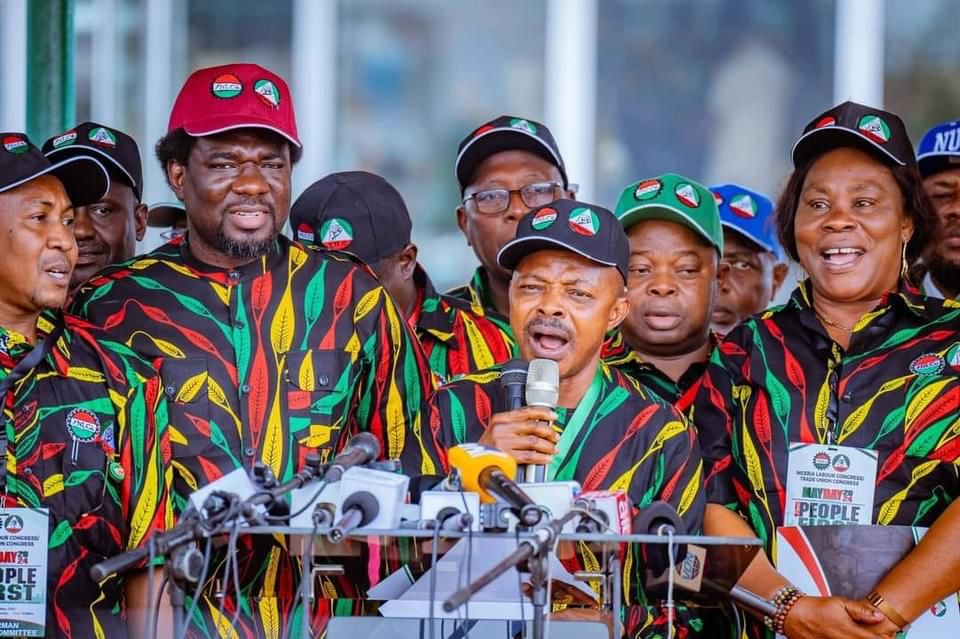
On Sunday, the Presidency asserted that the N250,000 minimum wage demanded by Organised Labour is unrealistic, stressing that the Federal Government cannot allocate all its resources to meet such demands.
This stance follows concerns raised by the Association of Local Governments of Nigeria (ALGON) about the proposed N62,000 minimum wage potentially straining council finances.
Negotiations between the Federal Government and Organised Labour reached an impasse on May 28, with the government and the Organised Private Sector offering N62,000, which the labour unions deemed inadequate and insulting to Nigerian workers.
In an exclusive interview, Bayo Onanuga, Special Adviser to President Bola Tinubu on Information and Strategy, emphasized that the resources of the nation cannot be directed solely to a small fraction of the population.
He said, “The government cannot use all its resources to pay workers. The workers we are even talking about are not up to 10 per cent of the population. Many people are self-employed or engaged in the private sector and are not affected by this demand.”
Onanuga called for Labour to reconsider their demands, noting that the government, in consultation with the private sector, proposed the N62,000 figure. “Only Labour, which appears to be in the minority, kept saying they won’t accept N62,000. They are not even employers but employees,” he added.
President Tinubu, during his Democracy Day address, announced that an executive bill for the new national minimum wage would be sent to the National Assembly.
While Onanuga could not specify when the bill would be transmitted, he anticipated it would be after the Sallah break. He also indicated that the Federal Government might not meet Labour leaders again unless necessary.
Efforts to reach Labour leaders on Sunday were unsuccessful as they were returning from the International Labour Organisation conference in Geneva.
The tripartite committee, set up by the Federal Government to review the minimum wage, urged labour unions to reconsider their demands.
Chairman Bukar Aji highlighted various government incentives, including a N35,000 wage award for all treasury-paid federal workers, financial inclusion initiatives, and substantial funds allocated for various sectors to mitigate the economic impact of the petrol subsidy removal.
Aji emphasized that the committee aims to prevent job losses by setting a sustainable minimum wage, encouraging labour unions to accept the N62,000 proposal to support the broader economic stability of the country.
Subscribe to National Updates for more News.

